
Watch AJ Punch His Boots
This quick video shows the full process, from marking to a finished punch.
What Is Boot Punching & When Should You Do It?
A ski boot punch creates a controlled expansion of the plastic shell to relieve pressure caused by bony spots and unique foot shapes. Instead of buying an oversized, poorly fitting boot, you keep the performance fit and add space exactly where you need it.
Punching is the right move when the pain is localized and structural, meaning you can point to one specific spot that's causing the problem. If the whole boot is wrong for your foot, fitting is the answer. If it's one nasty pressure point? Punch it.
Common Punch Zones
Six areas where skiers most commonly need shell work. Tap any zone for depth and difficulty.
Tools You Need
You don't need a shop press. A small, precise system works better for targeted shell work.
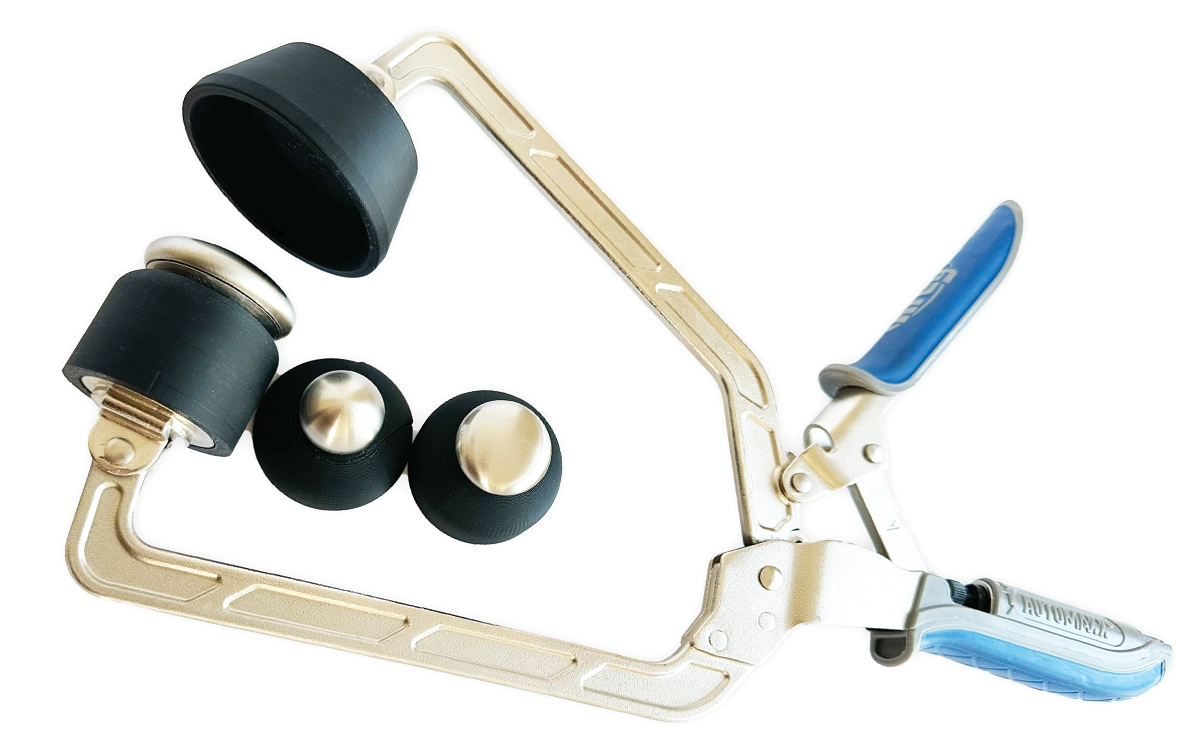
Magnetic punch heads self-align to your mark. Deep-reach frame handles any shell area. Built for modern boot plastics, not shop press overkill.
Get the BootForge™ - $169.00A quality heat gun heats the shell evenly. Wagner heat gun AJ uses →
Standard chalk for marking the liner and shell. BootForge™ Pro also includes a marking kit.
The Step-by-Step
Six steps from pain point to a better fit.
Mark the Pressure Point
- Remove your liner and put only your liner on, without the shell, to pinpoint your exact pressure spots
- Use a fingertip to press along the shell until you feel the exact pain point
- Mark that spot on your liner with chalk
- Put the liner back into the shell, then remove it. The chalk will transfer the mark inside the shell
- Transfer the mark from the inside to the outside of the shell so you can see it while punching. BootForge™ Pro includes a marking kit that makes this easy
Heat the Shell
- Hold your heat gun 3-6 inches from the boot shell
- Move in slow circles around the punch area, don't stay in one spot
- Heat until the shell feels warm to the touch, barely softer than normal
- The goal is pliable, not melting. A little heat goes a very long way
Set Up the BootForge™
- While the shell is warm, position the BootForge™ frame around the boot
- Align the magnetic punch head directly over your chalk mark
- Adjust the head angle using the clamp. Different areas of the boot may need a different angle for the punch to seat properly
- Set the tension knob to your desired pressure before clamping down
Punch the Shell
- Clamp the BootForge™ onto the warm shell over your mark
- Tighten slowly and deliberately. You're pushing the plastic 3-5mm, not forcing it
- Lock the clamp in place and leave it. Do not remove it until the boot is fully cool
Let It Cool
- Leave the clamp fully under load while the shell cools completely
- Room temperature works great, typically 20-30 minutes
- Need faster? Leave it outside in the winter cold
- Once the shell is firm and fully cool, remove the clamp
Test the Fit
- Re-install your liner into the shell
- Put the boot on, buckle normally, and flex forward a few times
- Evaluate: is the pressure gone? Partially better?
- If still not perfect, repeat the process. Multiple smaller punches beat one giant punch every time.
Punch Depth Reference
Less is more. Start here, then add more in subsequent sessions if needed.
Remember: You can always punch more. You can't easily un-punch. Make small, iterative adjustments until the fit is dialed.
How Different Shell Materials Punch
Not all plastics behave the same under heat and pressure.
Most common boot material. Smooth, predictable, forgiving.
Premium race material. Holds detailed shapes very well.
Needs slightly more heat, takes a minute longer to get pliable.
Punchable but more challenging. Work slowly and carefully.
Frequently Asked Questions
Does punching weaken my boot?
How long does a punch last?
Can I punch both boots identically?
Can I add both length and height in the toe box?
When should I punch vs. buy new boots?
Get the BootForge™
Magnetic punch heads. Deep-reach frame. Everything you need to punch your boots like a pro, at home, whenever your feet need it.