
Punching Ski Boots at Home vs at a Ski Shop
A boot punch is the same job wherever you do it: heat the shell, push out a bump of plastic where a bone hits, and let it cool. The real question is what your problem is, and how many times you'll need it done.
The short answer
If you can point to one spot that hurts, like a bunion, sixth toe, ankle bone or the bump inside your arch, you can punch it at home and get the same result a shop would. If the whole boot is wrong, or you need footbeds, alignment or a full shell stretch, go see a good boot fitter.
Home punch vs shop punch
| At home with a punch kit | At a ski shop | |
|---|---|---|
| Cost | One-time cost for the kit, then free every time | Usually charged per punch, per boot, every visit |
| Timing | Whenever you want, including the night before a trip | When the shop can fit you in, often busiest right when ski season starts |
| Fine-tuning | Punch a little, ski it, punch a little more | Each adjustment is another trip |
| Best for | Localized bony spots: bunion, sixth toe, ankle bones, navicular, toe box | Complex fits, full shell stretches, footbeds, alignment and canting |
| Who does the work | You, with a step-by-step guide | An experienced fitter |
When to go to a shop
- The boot is the wrong size or shape overall, not just one hot spot.
- Your heel lifts or your foot slides forward. That's a fit and liner problem, not a punch problem.
- You want custom footbeds or need help with alignment and canting.
- You need a lot of length. Stretching the toe box significantly is a job for a shop press.
When punching at home makes sense
- You can put a finger on the exact spot that hurts.
- The pain is from a bone pressing on the shell, not general tightness.
- You've already paid for punches before, or have more than one pair of boots in the house.
- Your feet change over the season, or you just bought new boots that need a little work.
A quick way to check: take the liner out, put it on your foot and press along the inside of the shell with your fingertip until you find the pressure point. If it's one clear spot, a punch will fix it.
Why I built BootForge
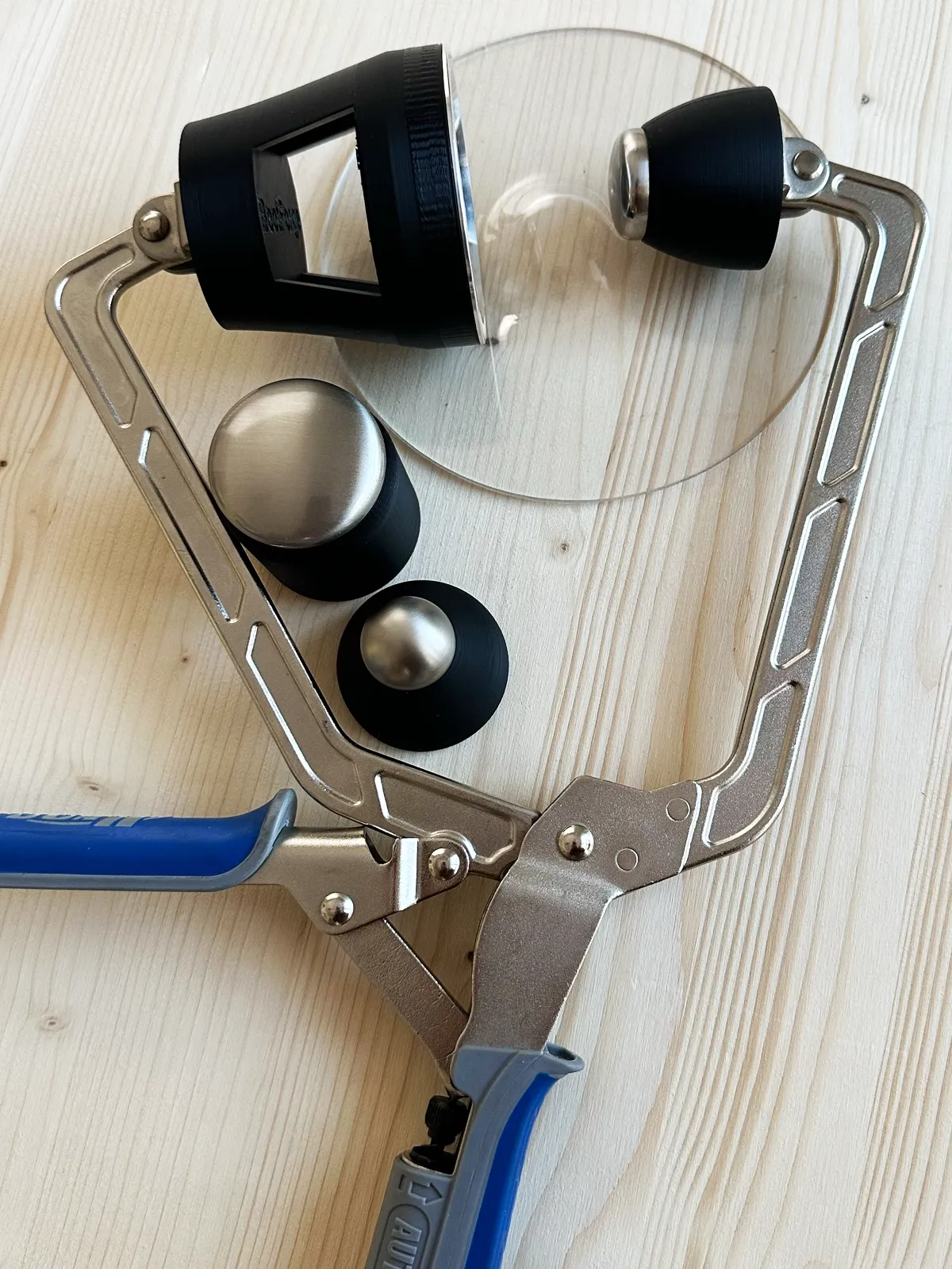
I got tired of driving to the shop for a 10-minute punch and then driving back when it needed a little more. BootForge uses a clamp to push a magnetic punch head from inside the shell into a receiver on the outside, so the plastic moves exactly where you marked it and nowhere else. The heads swap in seconds, so you can go small for a bunion and wide for an ankle bone with the same setup. Some shops use it too, because it's quick to set up and repeatable.
If you're new to it, start with the How to Punch Ski Boots guide, or take the BootForge Kit Finder to see which heads you need.
FAQ
Can I ruin my boots punching them at home?
You can damage any boot shell with too much heat in one spot, at home or in a shop. That's why the process is slow on purpose: even heat, a small first punch, and letting the shell cool fully under the clamp. If you follow the step-by-step guide, the risk is low.
Does punching void my boot warranty?
It can. Some boot makers don't cover shell modifications, whether a shop or you did them. If your boots are brand new, check the warranty terms first.
How much room does a punch add?
Usually a few millimeters, which is a lot inside a ski boot. Most spots need 3 to 6 mm, bunions sometimes up to 8 mm. Start small and add more in a second session if you need it.
Can a punch fix a boot that's too small?
No. A punch adds room at a specific spot. If your whole foot is crammed, or your toes are jammed against the front, you need a different size or a boot fitter.